Looking for crochet patterns for beginners that are simple enough to finish and soothing enough to enjoy? You are in the right place. This guide gives you seven easy projects, a full step-by-step dishcloth pattern, a 10-minute mindful crochet practice and a few habits that turn your crochet time into a genuine break.
Many people describe crochet as a way to slow down: the repeated movement, the soft yarn and the visible progress give the mind something gentle to hold on to. Crochet is not a treatment for anxiety or any other health condition, but it can be a pleasant, low-pressure part of a self-care routine. Start with the project that appeals to you most, and go at your own pace.
Table of Contents
Why crochet can feel calming
Crochet asks for enough attention to keep your thoughts from racing, but not so much that it feels like effort. Many crocheters describe a soft, absorbed state in which worries move to the background for a while. The same repeated movements are at the heart of many relaxation routines.
Research on knitting, crochet and other creative hobbies points in a similar direction. Some surveys and small studies have linked regular craft activity with better mood and a lower sense of stress. These findings come with limits: many studies rely on self-reported answers, and people who already enjoy crafts may differ from those who do not. So the honest summary is this: crochet may help you unwind and feel more at ease, and it is a pleasant way to spend a quiet moment.
Four features of crochet explain why so many people find it soothing:
- Rhythm. Repeating the same stitch creates a steady, predictable pattern.
- Gentle focus. Counting stitches gives your mind a simple task instead of a worry.
- Touch. Soft yarn is pleasant to handle, which many people find grounding.
- Visible progress. Each row adds to something you can see and hold, a welcome feeling when other parts of life feel unfinished.
Crochet is a complement to good sleep, movement, social contact and, when needed, professional support. It is not a substitute for any of them.
What you need before you start
You need very little to begin, and a basic kit costs less than most hobbies:
- Yarn: smooth, light-coloured, medium-weight (worsted, category 4) yarn. Light colours make each stitch easy to see. Cotton suits dishcloths and coasters; soft acrylic or wool blends suit scarves and hats.
- Hook: 5 mm (US H-8) works well with worsted yarn. Ergonomic handles can be more comfortable if your hands tire quickly.
- Scissors and a yarn needle for cutting and weaving in ends.
- A stitch marker to mark the start of a round. A safety pin works too.
- A small bag or basket to keep everything together, so you can start in a minute.
US and UK stitch names
Patterns written in US and UK English use the same names for different stitches, which confuses many beginners. Check which one your pattern uses before you start.
| Stitch | US name | UK name |
|---|---|---|
| Shortest basic stitch | single crochet (sc) | double crochet (dc) |
| Taller basic stitch | double crochet (dc) | treble crochet (tr) |
All patterns in this guide use US terms.
The 4 basics to learn first
Every pattern in this guide is built from four skills. Practise each for five minutes on scrap yarn before starting a project.
- Slip knot. Make a loop, pull a second loop of yarn through it, place it on your hook and tighten gently. It should slide easily on the hook.
- Chain stitch (ch). Wrap the yarn over the hook (a yarn over) and pull it through the loop on the hook. Repeat to make a row of chains. This is the base of almost every project.
- Single crochet (sc). Insert the hook into a stitch, yarn over and pull up a loop (two loops on the hook), yarn over again and pull through both loops.
- Double crochet (dc). Yarn over, insert the hook into a stitch, yarn over and pull up a loop (three loops on the hook), then yarn over and pull through two loops twice.
Slow video tutorials are a great complement to written steps, especially for the movement of your hands. Aim for even, relaxed stitches rather than speed. Your tension will settle naturally with practice.
7 easy crochet patterns for beginners
Start with the first project and move down the list as your confidence grows. Times are rough estimates for a beginner and vary from person to person.
| # | Project | Level | Main stitches | Approx. time | Why it suits a calm session |
|---|---|---|---|---|---|
| 1 | Dishcloth | Very easy | chain, single crochet | 1 to 2 hours | One stitch, no counting stress |
| 2 | Coaster set | Very easy | chain, single crochet | 30 min each | Quick finish, small win |
| 3 | Granny square | Easy | chain, double crochet | 1 to 2 hours | Steady rhythm in rounds |
| 4 | Simple scarf | Easy | chain, single or double crochet | 6 to 10 hours | Long, meditative rows |
| 5 | Headband | Easy | chain, double crochet | 2 to 3 hours | Small, wearable, rewarding |
| 6 | Beanie | Easy to medium | single and double crochet in the round | 3 to 5 hours | Continuous rounds, no turning |
| 7 | Mini amigurumi ball | Medium | magic ring, single crochet | 1 to 2 hours | Playful and compact |
Full pattern: your first dishcloth
This pattern uses a 5 mm hook and worsted cotton yarn, and makes a cloth of about 20 cm (8 in). Your size may differ slightly depending on your tension, and that is fine.
- Foundation: chain 31.
- Row 1: single crochet in the 2nd chain from the hook and in each chain across (30 stitches). Chain 1, turn.
- Rows 2 to 30: single crochet in each stitch across (30 stitches). Chain 1, turn at the end of each row.
- Finish: stop when the cloth looks square. Cut the yarn, leaving a 15 cm tail, pull it through the last loop and tighten.
- Weave in the ends with your yarn needle.
If your stitch count drifts, count at the end of each row and place a marker in the first stitch of the row.
A few notes on the other six
- Coasters: use the dishcloth pattern with a chain of 16 and about 15 rows. Make four and you have a gift.
- Granny square: begin with a chain ring and work clusters of three double crochets with chain spaces between them, adding one round at a time. Switching colours each round keeps it fun.
- Scarf: chain to your desired width (for example 25 to 30 chains), then repeat single or double crochet rows until it reaches the length you like.
- Headband: crochet a rectangle long enough to wrap around your head, then sew the short ends together.
- Beanie: work in the round from the crown, increasing evenly until the circle is wide enough, then crochet straight rounds to the length you want.
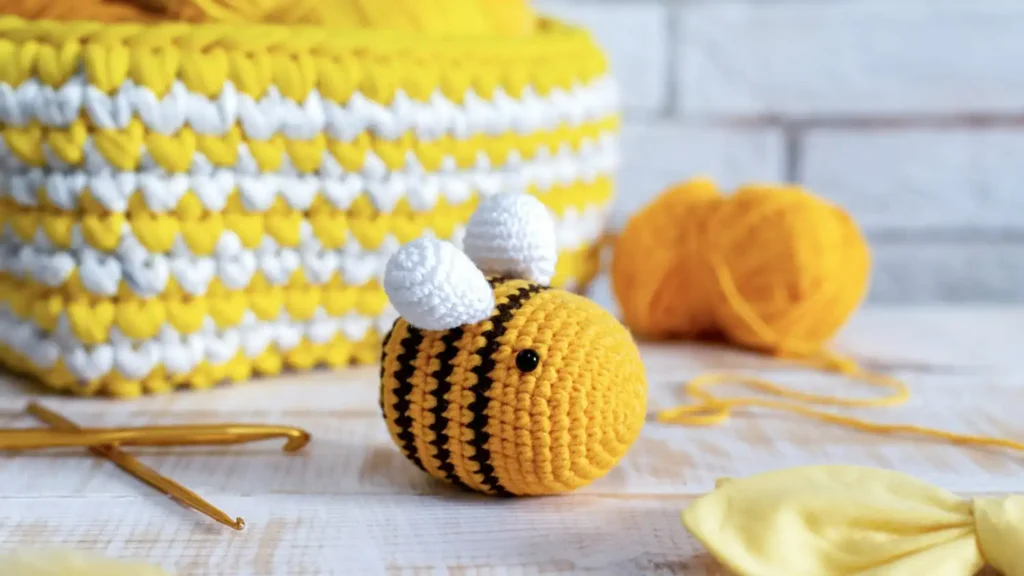
- Mini amigurumi ball: crochet a magic ring, increase for a few rounds, work even rounds, then decrease while stuffing.
Mindful crochet: a 10-minute practice
Mindful crochet means giving your full attention to what your hands are doing, without judging the result. Try this short practice with any of the projects above.
- Settle (1 minute). Sit comfortably, put your phone out of reach and take three slow breaths.
- Feel (2 minutes). Notice the yarn in your fingers: its texture, its weight, its colour.
- Stitch (5 minutes). Work slowly, one stitch at a time. Say “in, over, through” silently if it helps you stay with the movement.
- Return (1 minute). When your mind wanders, which it will, notice it kindly and bring your attention back to the next stitch.
- Close (1 minute). Look at how many rows you made and take one more slow breath.
A simple weekly routine
Small, regular sessions are easier to keep than long, rare ones. Adapt this to your life:
- Morning: 10 minutes with your tea or coffee before the day starts.
- Lunch break: 15 minutes away from screens, if your day allows it.
- Evening: 20 minutes in soft light, as a wind-down habit before bed.
- Weekend: a longer session, alone or with a friend or a local crochet group.
Many people find that sharing the hobby adds to the pleasure, so look for a crochet circle in your area or an online community.
Common beginner mistakes and quick fixes
Every crocheter has made these mistakes. They are part of learning, not signs that you are doing it wrong.
| Problem | Likely cause | Quick fix |
|---|---|---|
| The piece gets wider or narrower | Stitches added or missed at the row edges | Count stitches at the end of each row; mark the first stitch |
| Stitches are too tight to work | Gripping the yarn or hook too hard | Relax your hands, breathe, or try a hook half a millimetre larger |
| The edges are wavy | Uneven tension or an extra chain at the turn | Keep turning chains consistent, and use one chain only |
| You cannot see your stitches | Dark, fuzzy or very thin yarn | Switch to smooth, light, medium-weight yarn |
| Your hand or wrist hurts | Long sessions in one position | Take short breaks, stretch gently, and try an ergonomic hook |
| You feel frustrated and want to quit | A project too big or too complex | Pick a small project, or rest and come back later |
Pain that persists in your hands or wrists is worth mentioning to a healthcare professional.
When crochet is not enough
Crochet can be a kind companion on a stressful day, but it cannot replace professional care. Consider talking to a doctor, psychologist or other qualified professional if you notice that:
- worry, sadness or irritability last for weeks or get in the way of daily life;
- you sleep very little or very much for a long period;
- you lose interest in things you used to enjoy, including crafts;
- you have thoughts of harming yourself. In that case, please contact your local emergency number or a crisis service right away.
Crochet can sit alongside support from professionals, friends and family. It does not need to do all the work alone.
Frequently asked questions
What is the easiest crochet pattern for a complete beginner?
A flat dishcloth or coaster in single crochet is the easiest place to start. It uses only chains and one basic stitch, and it is quick to finish.
What size hook and yarn should a beginner use?
A 5 mm hook with smooth, light-coloured, medium-weight (worsted) yarn is a comfortable combination. The stitches are large enough to see clearly.
How long does it take to learn to crochet?
It varies. Many beginners can make basic stitches within a few short sessions and finish a first small project within one or two weeks of regular practice.
Is crochet good for anxiety or stress?
Many people find crochet relaxing, and some studies link creative hobbies with better mood and lower stress. It may help you unwind, but it is not a treatment for anxiety or any other condition. If you are struggling, please speak with a healthcare professional.
How often should I crochet to feel the benefits?
There is no official rule. Short, regular sessions of 10 to 20 minutes suit many people, and the most important thing is that you enjoy it.
Is crochet or knitting easier for beginners?
Many beginners find crochet easier at first, because it uses one hook and one live loop instead of two needles and many loops. The best choice is the one you enjoy more.
Start small, start gently
The best crochet pattern for a beginner is the one that makes you want to pick up your hook again tomorrow. Choose a small project, give yourself permission to be imperfect, and enjoy the quiet rhythm of the stitches. Ten calm minutes is a perfectly good start.
Ready to begin? (shop section, adapt to your store)
If you sell patterns or kits, a short, honest call to action works best. Examples you can adapt:
- Beginner pattern PDF: “Step-by-step dishcloth and coaster pattern with photos, ideal for your first project.”
- Starter kit: “Smooth cotton yarn, a 5 mm hook, a yarn needle and a printed pattern, everything you need for your first project.”
- Newsletter: “Get one free beginner pattern and a gentle crochet idea in your inbox each month.”
Avoid wording such as “cures anxiety” or “treats stress” in product pages and ads. Describe the product and the pleasure of making, for example “a relaxing hobby” or “a creative break”.
This article is for information only and does not replace the advice of a healthcare professional.